



Bhavna S4G, Solar Expert
Last Updated 3 months ago
Trending
Popular
How does sunlight become electricity with solar panels? How exactly do they work and why should you get them for your home or business?
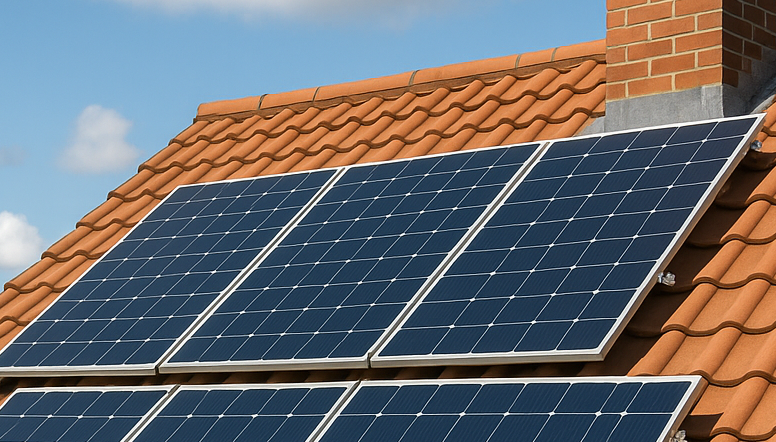
Solar energy has taken the UK by storm, everywhere you go today you’ve likely seen sleek black panels on roofs or large fields glinting in the distance, but have you ever stopped to ask, how do they work?
The answer is simpler than you might expect. These panels aren’t magic; they’re science in action and every ray of sunlight that hits a panel sets off a chain reaction inside it, a dance of light and electrons that produces clean, renewable energy you can use to power everything from your kettle to your factory machinery.
In both residential and commercial settings, solar arrays have become a reliable way to generate electricity, lower costs, and shrink carbon footprints. Whether you run a small café or a logistics company, or you’re simply trying to make your home more energy independent, understanding how solar panels make electricity helps you make smarter decisions about your energy future. And helps ease whatever reservations you may have about solar energy which is a bonus.
In this guide, we’ll break down everything from how photovoltaic panels work to how solar panels generate electricity and by the end, you’ll know exactly what’s happening on your roof (or across your site) and why solar energy has become one of the most powerful tools in the UK’s move toward net zero.
Solar panels convert daylight into electricity through a process called the photovoltaic effect. Each panel is made up of tiny cells that capture sunlight and turn it into direct current (DC). An inverter then converts that DC into alternating current (AC), the type of electricity your home or business uses.
Here’s the short version of how solar electricity works:
Whether you’re exploring how pv panels work for your household or for your business, the principle stays the same: sunlight becomes energy, savings, and independence.
Before we talk about how solar panels make electricity, let’s make like we do at grocery stores and check what’s inside them. Each panel is made up of silicon-based cells that soak up energy from sunlight, when sunlight hits these cells, it causes the electrons inside to move about, and that movement creates the electricity you’ll use to power your home.
At this stage, the power is in direct current (DC)form, and this reaction is called the photovoltaic effect, which is where the term PV panels comes from. In a full solar setup, multiple panels are connected to form an array that captures enough daylight to power your home or business. The whole process is instant, silent, and completely clean, no moving parts, no fuel, no fuss. Just pure energy from the sun.
The UK isn’t famous for our blue skies and sunshine; we’re more known for the kind of weather that inspires a lifetime of raincoats and boots, so it’s normal to wonder if solar panels work at their best in our weather, and the short answer is, yes, they most definitely do. Even on cloudy days, PV panels work the same way they would if the sun shone daily; that’s because they generate energy from daylight, not direct sunshine. The UK receives more than enough daylight hours each year to make solar worth the leap. According to the Energy Saving Trust, modern systems can produce up to 70% of their maximum capacity even under overcast skies.
This makes how solar panels generate electricity in the UK surprisingly efficient. Cooler temperatures actually amp up performance because heat can reduce voltage output, Spain may get more sun, but the UK’s mild climate keeps panels producing consistently throughout the year, not to bad for a primarily grey climate.
Now that we know how solar panels make electricity, let’s look at how it’s used.
For homes and businesses, the flow of energy is almost identical:
Stage
What Happens
Equipment Involved
Result
1. Light Capture
Sunlight hits the surface of the solar panels and activates electrons inside the photovoltaic cells.
PV panels / solar array
DC (Direct Current) electricity is created.
2. Power Conversion
DC electricity travels to the inverter, where it’s converted into usable AC power.
Inverter
AC (Alternating Current) powers appliances and lighting.
3. Energy Use
Electricity flows directly into your home or business electrical system
Consumer unit / main switchboard
Powers everything that runs on electricity.
4. Storage
Excess power is saved for later use when sunlight drops.
Solar battery
Reduces grid dependence and maximises self-use
5. Export
Any remaining surplus is automatically sent back to the grid.
Meter / SEG connection
Earn credits or payments via the Smart Export Guarantee.
A solar array is just a group of solar panels wired together to produce power. Each panel does its bit, and when they’re connected, they work as one system that powers your home or business.
Here’s a quick look at how different systems stack up:
Category
Typical System Size
Annual Output (Approx.)
Main Benefit
Residential Home
3–5 kW
2,500–5,000 kW
Cuts energy bills and adds property value
Small Business / Office
10–50 kW
10,000–50,000 kWh
Lowers running costs and supports sustainability goals
Large Commercial Site
100 kW–1 MW+
100,000 kWh+
Strong ROI and long-term energy security
Whether you’re powering a home or a large site, the goal’s the same — steady, affordable energy that keeps your costs predictable and your carbon footprint low.
Today’s solar panels aren’t what they used to be. They’re leaner, tougher, and way more efficient; most can turn roughly a quarter of the sunlight they get into usable power.
Here’s the gist: each panel is made up of silicon cells that soak up light. When sunlight hits those cells, the electrons inside start to move, and that movement creates electricity. It starts as direct current (DC), and your inverter steps in to convert it into alternating current (AC) — the type your home or business actually runs on.
The real trick is in the details. Modern panels use coatings that grab extra light, even when the sky looks miserable. The glass is tough enough to handle hail or heatwaves, and the frames keep everything steady through years of weather. Then you’ve got smart inverters and optimisers that quietly make sure every panel’s pulling its weight. The result? A system that just works, rain or shine.
If your panels are the muscle, the battery’s the brains of the operation. It takes what your panels make during the day and saves it for later, so when the sun’s down, you’re still running on your own power instead of pulling from the grid.
During daylight, any energy you’re not using right away fills up your battery. When evening hits, that stored power takes over, keeping the lights on and the bills low.
For most homes, it means simple freedom, using your own electricity, on your own terms. For businesses, the payoff’s even bigger: shifting heavy equipment use to cheaper hours, staying powered through blackouts, and dodging those sudden tariff hikes.
It’s not just clever tech; it’s control. And that’s exactly what modern energy should feel like.
One of the nicest surprises for anyone switching to solar is just how low-maintenance it really is. Even though your panels sit out in the sun, wind and rain all year round, most will keep performing beautifully for 25–30 years, and plenty last even longer.
If you go for a quality system (like the ones installed by Solar4Good), you’re also backed by several layers of protection:
As for maintenance? It’s refreshingly straightforward. Most homeowners only need to give their panels a quick clean once or twice a year and check that the cables and inverter look sound. For businesses with larger or ground-mounted systems, a few extra check-ups make sense, especially where dust or debris can build up faster. 25 years): Guarantees your panels will keep running at roughly 80% efficiency or more.
Pro tip: Most modern systems come with smart monitoring tools that send automatic alerts if performance dips, so you’ll know right away if something needs attention.
Once your panels are up and running, the goal is simple, use that free energy as smartly as possible. It’s a bit like signing up for a gym; the more you put in, the more you get out.
For homeowners:
A few small tweaks in how you use energy can make a real difference — boosting your self-consumption by up to 30%. That’s less money going to the grid, and more staying in your pocket.
Curious how this could work for your site? Check out our Commercial Solar Installation services
Switching to solar isn’t just about cutting costs; it’s about taking control. Once you understand how those panels on your roof actually work, it stops feeling like complex tech and starts feeling like common sense. The technology’s ready. The incentives are in place. And the benefits keep adding up. So if you’ve been waiting for the right moment to go solar, it’s not next year or someday, it’s now.
So, how do solar panels work in 2025? In short, better than ever. They’re smarter, more reliable, and far more affordable than most people realise.
At Solar4Good, we’ve seen how the right system can completely change the way homes and businesses use energy. For households, that means lower bills and more independence from the grid. For commercial clients, it’s about long-term savings, stronger sustainability targets, and a cleaner brand reputation.
If you’re ready to take the next step, explore our Residential Solar or Commercial Solar pages to see what’s possible. Or simply get in touch for a free, no-pressure consultation, we’ll help you find the setup that works best for your space, your goals, and your future.
Yes, they generate power from daylight, so they work even on overcast days.
With battery storage, yes. Stored daytime energy can run your home or business after dark.
Surplus power can be sold back to the grid under the Smart Export Guarantee.
Most UK installations fall under permitted development, but always confirm for commercial projects.
Not in principle, both rely on PV technology. Commercial systems are simply larger and may use multiple inverters or ground mounts.